Ph.D Dissertation project
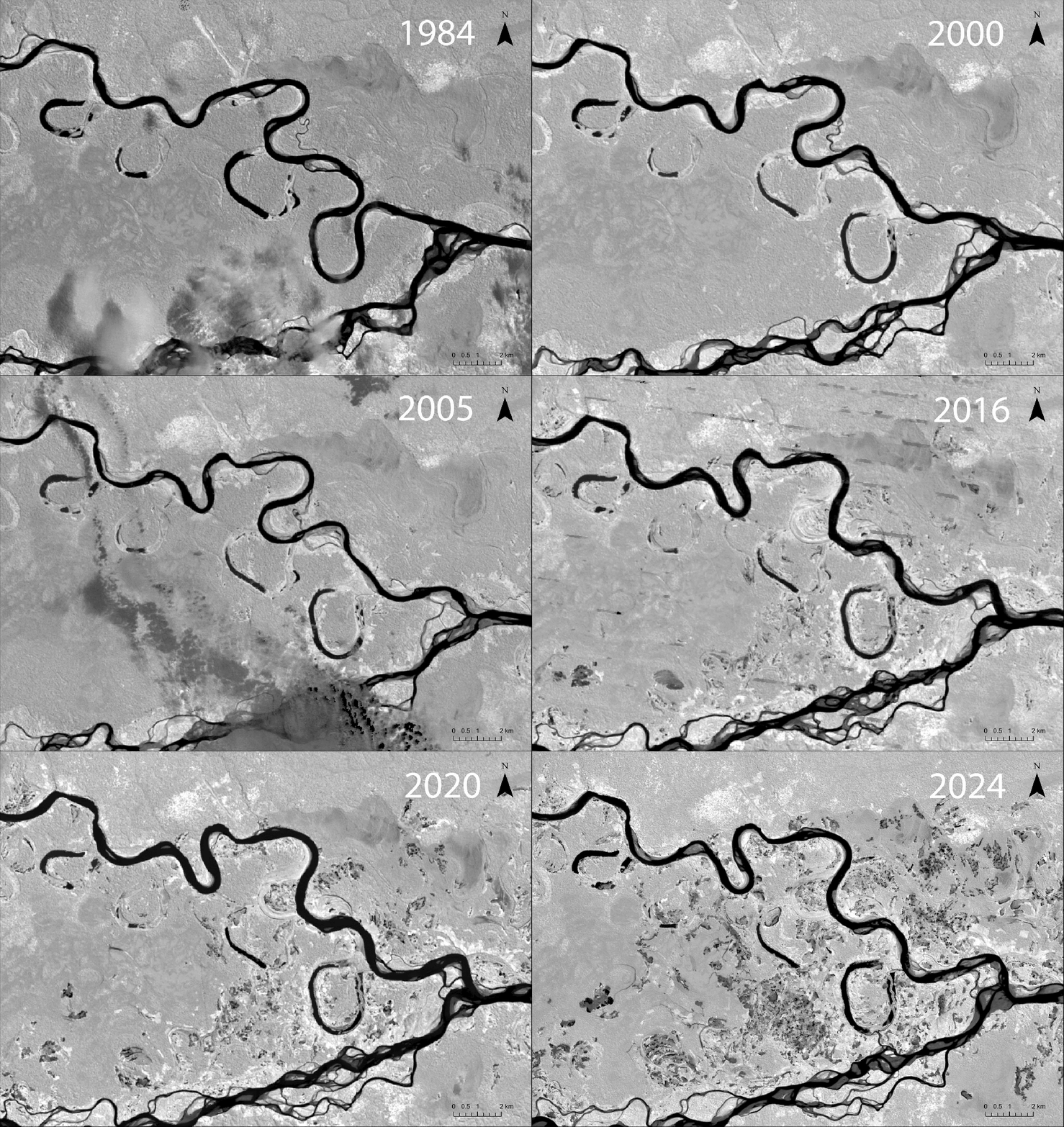
“Morphodynamic response of meandering rivers along aggressive gold mining and deforestation activities in the Amazonian rainforest”
The MDD watershed provides an ideal opportunity to evaluate and compare how rivers respond to these spatial and temporal alterations in the natural sediment supply and the potential health risk due to mercury bioaccumulation. There is large body of literature focused on understanding the dynamic processes of large meandering rivers, specifically in terms of morphology, hydrodynamics and sediment transport, as well as bedform dynamics and spatial patterns of grain size distribution. Based on the knowledge gained by these previous studies, scientists can rely on baseline estimations for the possible impacts due to the aggressive mining. However, the scale of ASGM mining in MDD and the physiographic characteristics of the watershed require a more detailed investigation to properly quantify the hydrodynamic and morphologic aspects to adequately know the environmental impact and provide insight about the resilience of Amazonian rivers under increasing anthropogenic landscape alterations.
The following research questions are thus proposed to address the impacts of ASGM on the morphodynamic processes within the MDD:
- What is the response of channel and floodplain suspended sediment in meandering rivers along aggressive mining and deforestation activities?
- How has aggressive gold mining altered the morphology and suspended sediment interaction at confluences?
- How does the bed configuration alter the hydrodynamic patterns and sediment transport in large meandering rivers?
Acknwledgements: FZS, FCDS, SEHINAV-MGP, and Rivers are Life
Advisor: Dr. Konsoer.
River Mining
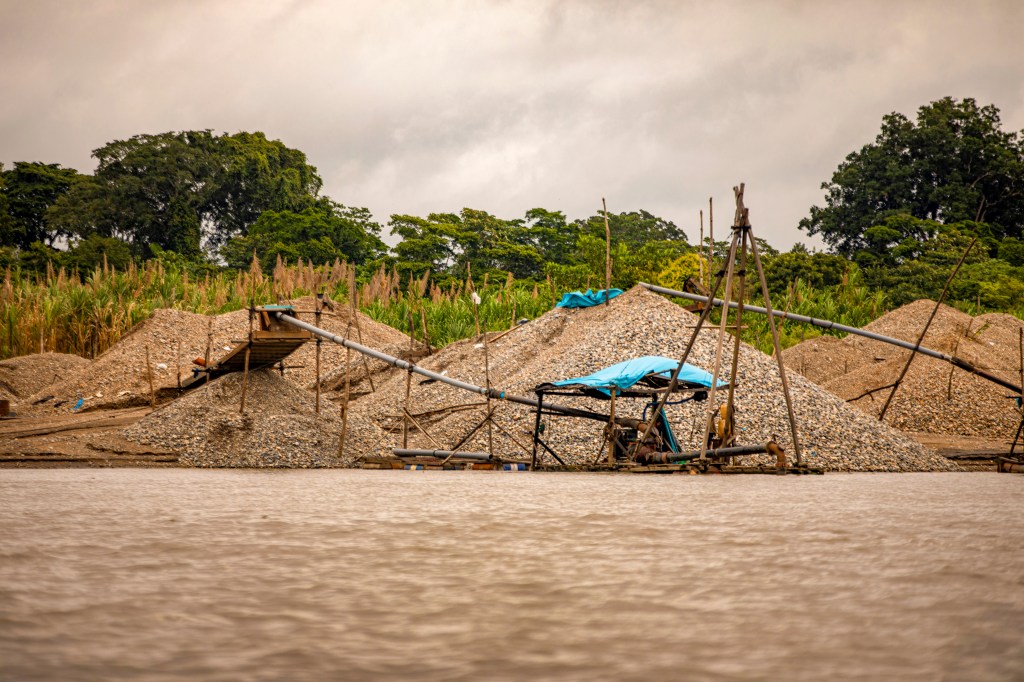
“Impacts of alluvial mining in the Madre de Dios Basin: physical effects and mitigation planning”
The River Mining Project (2020-2022) was designed and executed to improve the understanding of the impacts of alluvial gold mining on the geomorphology of the Madre de Dios river basin, and the consequent effect on aquatic biodiversity and the dispersion and bioaccumulation of mercury. It is an initiative of CITA-UTEC and CINCIA, in collaboration with the United States Department of Agriculture (USDA), to contribute to the governmental institutions of Madre de Dios, covering gaps in scientific information about the dynamics of the region’s rivers, and promoting comprehensive research and monitoring of them. It is expected that the results and products of this research will be considered in public policies and mitigation strategies, especially for the health and well-being of the human communities and wildlife of Madre de Dios that directly depend on the ecosystem services of the rivers for their subsistence.
Period: 2019 – Nov2021.
Funded by the USAID PEER fund.
PI: Dr. Mónica Moreno-Brush/Dr. Jorge D. Abad
Dancing Rivers

“Scientific Assessment of River Form and Flow: Baseline Information for Infrastructure Guidelines in the Peruvian Amazon”
CITA-UTEC emphasizes the integration of science and engineering for sustainable projects. In Peru, the lack of historical data and current scientific information on river dynamics poses a challenge. To address this, establishing a baseline for rivers is crucial for assessing future impacts and proposing mitigation actions, such as dredging Amazonian rivers. Creating a hydrogeomorphic baseline for the Marañon, Huallaga, Ucayali, and Amazonas rivers is essential for monitoring the waterway project’s impacts and aiding future infrastructure projects in the Peruvian Amazon.
CITA-UTEC is developing best management practices (BMPs) to measure physical parameters, predict impacts, and conduct environmental assessments in Andean-Amazon rivers. Understanding Amazonian river dynamics is key to developing suitable infrastructure projects. BMPs recommend establishing baseline information on environmental and physical parameters to guide infrastructure studies in the Peruvian Amazon, ultimately benefiting the region sustainably.
Funded by the Gordon and Betty Moore Foundation.
Period: 2018 – 2021.
 Leo Guerrero